95 Emotion Words to Name Exactly How You Feel
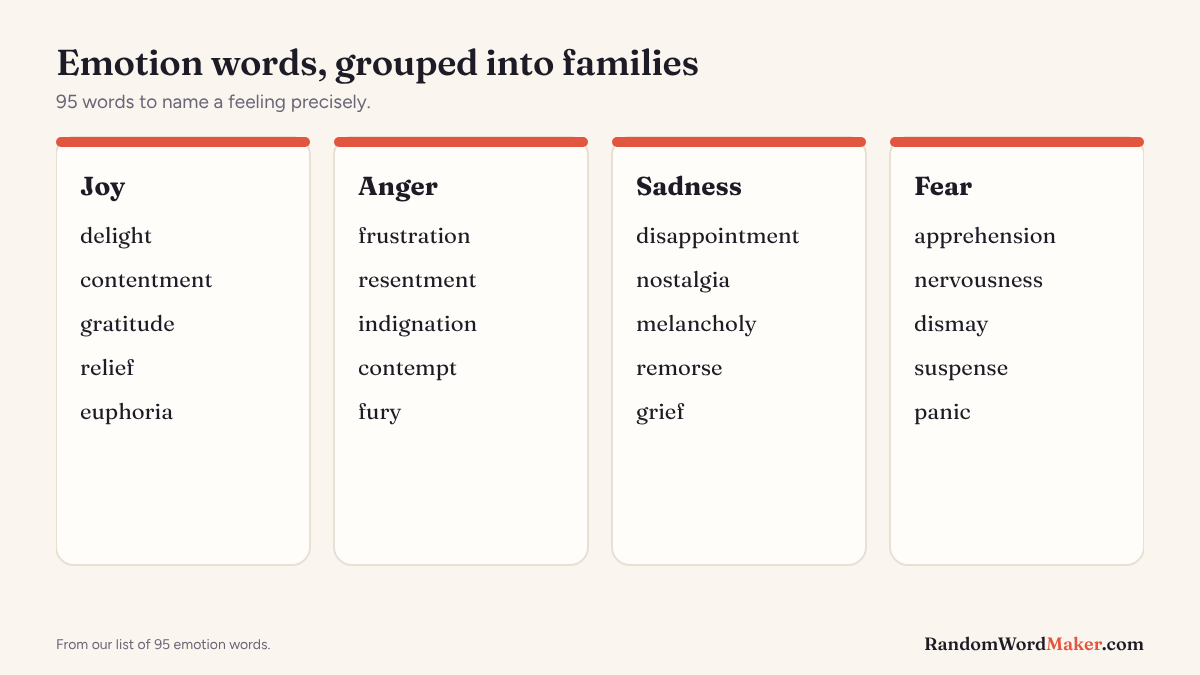
“Fine”, “bad” and “stressed” cover a lot of ground. But there is a real difference between disappointment and resentment, or between contentment and euphoria. Psychologists call the skill of telling them apart emotion differentiation or emotional granularity, and research links it with healthier ways of coping. Here are 95 emotion words from our list, grouped into families.
Key facts
- 95 emotion and feeling words in our list; 60 of them are common.
- Naming emotions precisely is called emotional granularity.
- Research reviewed in 2015 linked higher granularity with fewer harmful coping behaviours under stress.
Happiness and enjoyment
joy, delight, glee, pleasure, enjoyment, amusement, euphoria, contentment, satisfaction, fulfillment, gratitude, relief, optimism, excitement, enthusiasm, thrill, gusto, zest, zeal, fervor.
Love and connection
affection, fondness, adoration, admiration, devotion, compassion, empathy, pity, forgiveness, passion, desire, solace.
Anger
anger, rage, fury, wrath, ire, outrage, indignation, resentment, bitterness, spite, malice, hatred, animosity, contempt, scorn, grudge, temper, frustration, displeasure, disapproval.
Sadness
sadness, sorrow, grief, heartache, heartbreak, melancholy, nostalgia, disappointment, dissatisfaction, discontent, unhappiness, remorse, anguish, agony, distress.
Fear and worry
fear, fright, panic, apprehension, nervousness, angst, dismay, suspense, anticipation, shock.
Disgust, shame and others
disgust, aversion, shame, embarrassment, pride, vanity, jealousy, apathy, indifference, boredom, complacency, cynicism, ambition, amazement, awe, sentiment, mood, emotion.
Why the right word helps
In a 2015 review in Current Directions in Psychological Science, Todd Kashdan, Lisa Feldman Barrett and Patrick McKnight described emotion differentiation as the ability to label feelings with precision. People who do it well showed fewer maladaptive ways of coping with intense distress, such as binge drinking and aggression, and less severe anxiety and depression. The review also noted that the skill can be trained.
Ways to practise
- Name it twice. When you notice a feeling, find the general word (“angry”), then a more exact one from the list (“indignant”, “resentful”).
- Acting games. Use the emotion generator in drama class: read a neutral line in the style of a random emotion.
- Character writing. Give each character a main emotion and a hidden one.
This list is for learning and creativity, not a substitute for professional support. If you are struggling, talk to someone you trust or a health professional.
Sources
- Kashdan, T. B., Barrett, L. F. and McKnight, P. E. (2015). Unpacking Emotion Differentiation: Transforming Unpleasant Experience by Perceiving Distinctions in Negativity. Current Directions in Psychological Science 24(1).
- Word list: emotion words from our database, based on WordNet, checked by hand.